Before you go —
we send free sample boxes to businesses evaluating our strips.
No minimum. No obligation. Just try them on real nails.
Here’s a number I pulled together for a wholesale inquiry last week: a customer who gets a salon gel manicure every three weeks spends roughly $1,040 a year. Add one polish change per month and she crosses $1,400. I know this because she told me — she was one of mine, and she switched to strips in March. Her nail budget this year: about $190. She spent the difference on a weekend trip and sent me the photo to prove it.
Cost-of-living pressure didn’t invent nail budget math — it just made it social. “I did the actual math on my salon habit” is a post format that keeps working because the numbers are absurd once written down: $55–70 per salon visit, every two to three weeks, forever. Strips break the cycle not because they’re cheap but because the math is visible: a $5.99 box, done at home in 15 minutes, wearing up to 3–4 weeks.
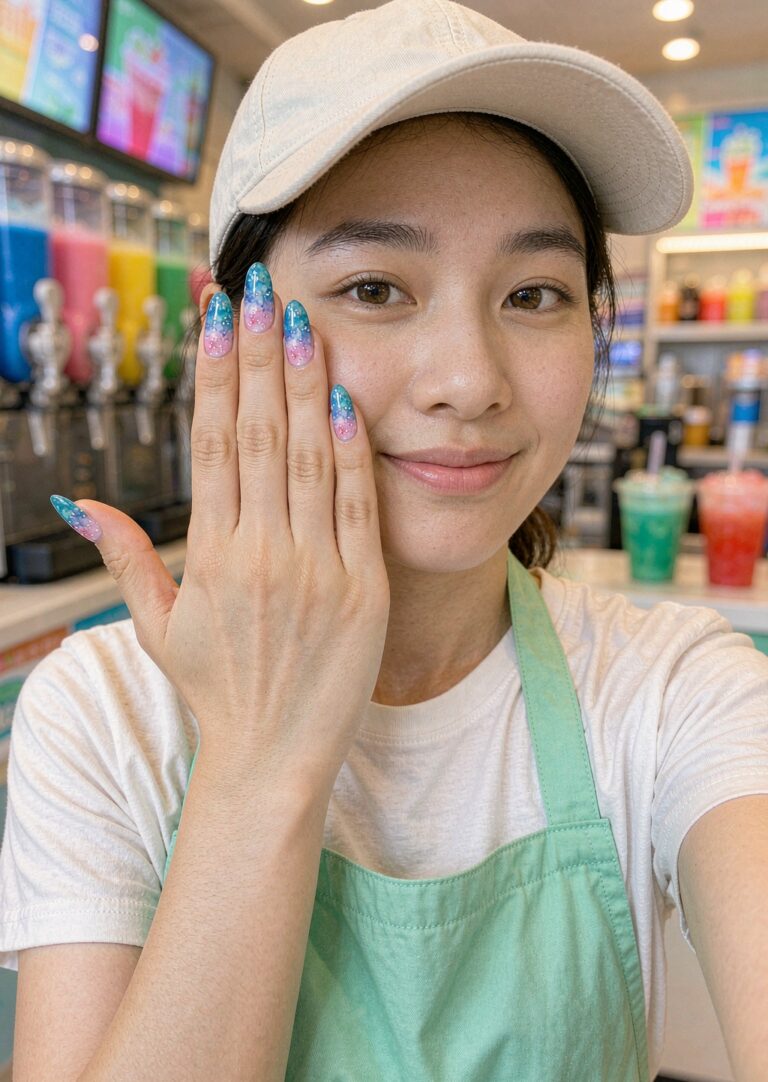
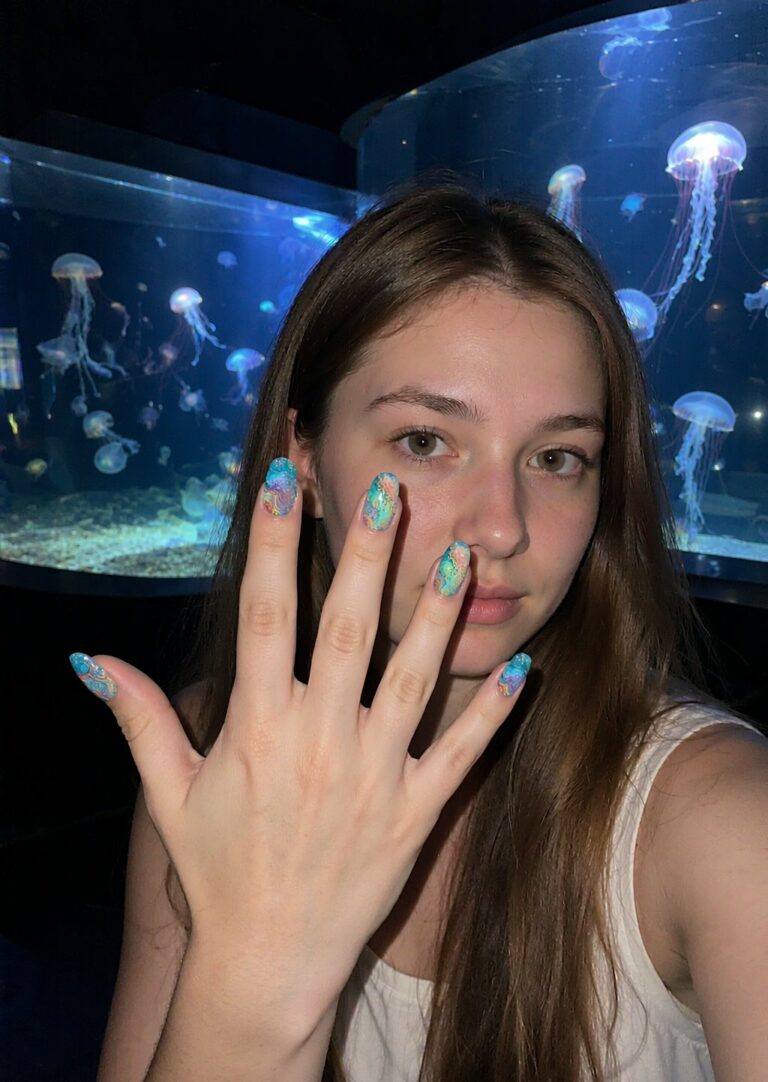
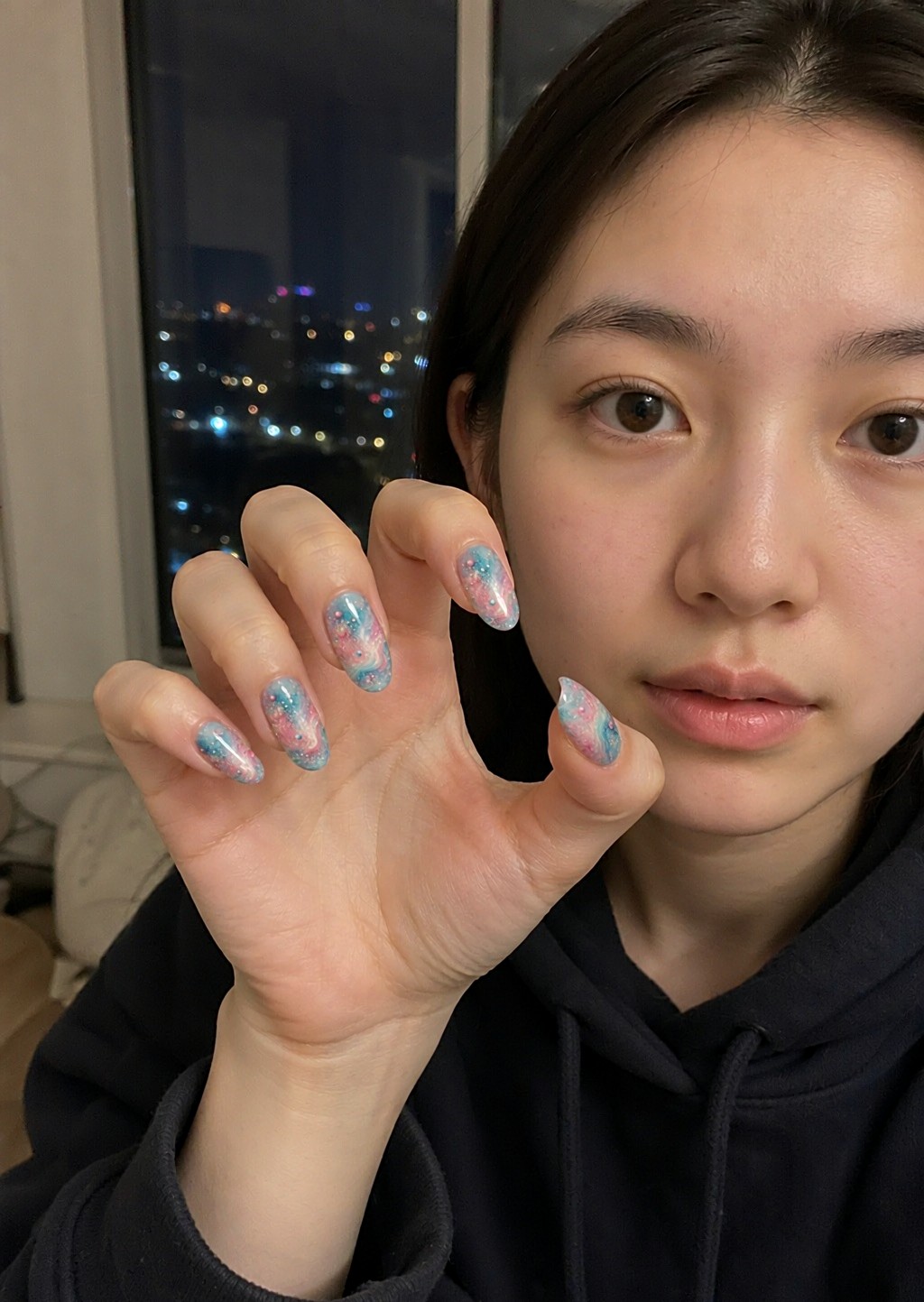
But here’s the part most strip sellers miss: customers don’t trade down on design. The woman doing this math isn’t settling for a plain pale pink. She wants the galaxy manicure she saw online — the seafoam base, the blush nebula blooming at the center of each nail, the stardust scattered across it. Nebula Whisper is that design, printed. She gets the look she’d have pointed at in a salon book, at a fraction of the line she just cut.
Galaxy and celestial prints photograph like art, which makes them the designs customers post — and every post is a free storefront. The risk with printed art designs is the formula underneath: soft gel scratches into a dull patch and the “stardust” goes murky within days. “Still feel a little sticky after 45 seconds” and “Needs to be under that lamp for three cycles” are real lines from one-star reviews in this category, and both trace to the same thing — a half-cured layer that never hardens.
The factory I source from tempers its semi-cured UV gel during formulation. Sixty seconds under a UV/LED lamp cures it genuinely hard — scratch-resistant, no top coat, gloss that holds. The glitter flecks stay crisp because the layer over them cures hard, not tacky. That’s the difference between a design that photographs well once and one that survives week three, where the repeat purchases happen.
I retail at $5.99 and the factory invoice is $0.89 for the 24-strip box (mixed sizes, so one box fits every customer hand). That’s roughly 85% margin before fees — enough to run a “one box per pay cycle” subscription pitch, which is how the annual math above becomes your recurring revenue instead of the salon’s. Minimum order is 20 boxes per design. SGS, MSDS and packaging compliance come before you ask.
The honest cons: a UV/LED lamp is required (bundle it); and celestial prints skew younger, so if your audience is classic-French-only, this isn’t your lead design — it’s the one that widens the cart.
Nebula Whisper is on the factory’s wholesale site with the full sheet and mixed sizes. Order the 20-box minimum, wear a set through one full pay cycle yourself, and write down what you actually spend on nails this year. That note is your best ad copy.
Wholesale and OEM enquiries: semi-cured.com — inquiry form on site.