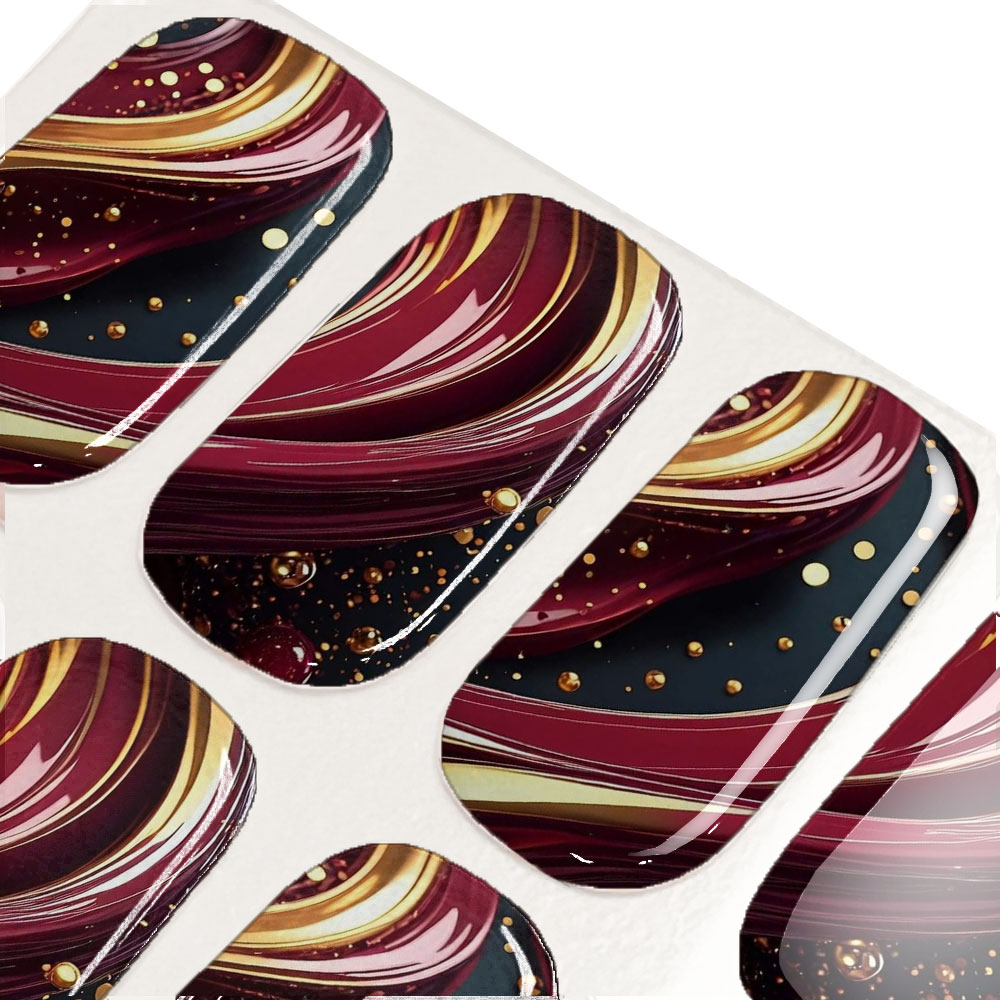
Before you go —
we send free sample boxes to businesses evaluating our strips.
No minimum. No obligation. Just try them on real nails.
You spent three weekends polishing your resume. You rehearsed answers to “tell me about a time you failed” in the shower. And then, two days before your interview at the firm or the bank, you’re standing in your bathroom wondering whether your nails are going to quietly sabotage the whole thing.
As someone who has sat on both sides of the interview table — first as the sweating candidate, later as the person holding the resume — I’ll tell you what actually happens: interviewers don’t score your nails. But they do notice hands. You shake hands at the start, you gesture while explaining your thesis project, you slide a folder across the table. Gnarled chipped polish reads as frazzled. A dark, intentional manicure reads as put-together.
The catch is that “intentional” doesn’t have to mean “$70 salon appointment you squeezed in at lunch.” This is the guide I wish someone had handed me before my first corporate interview, including the design I now recommend to every friend heading into one.
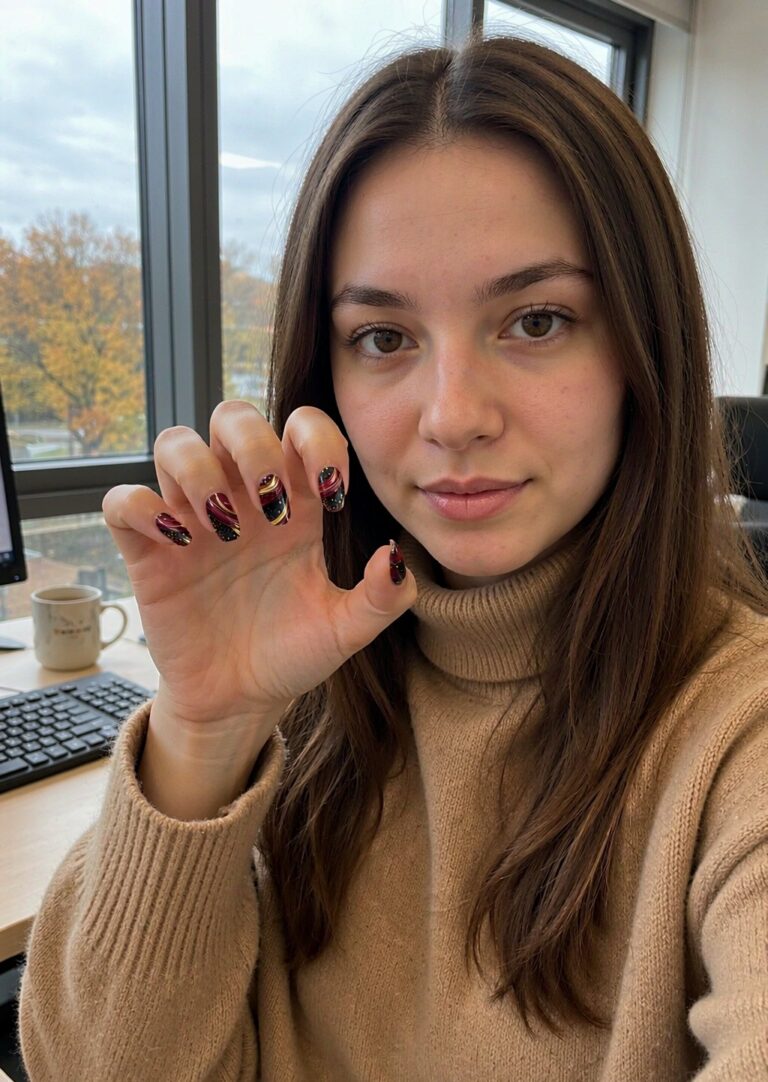
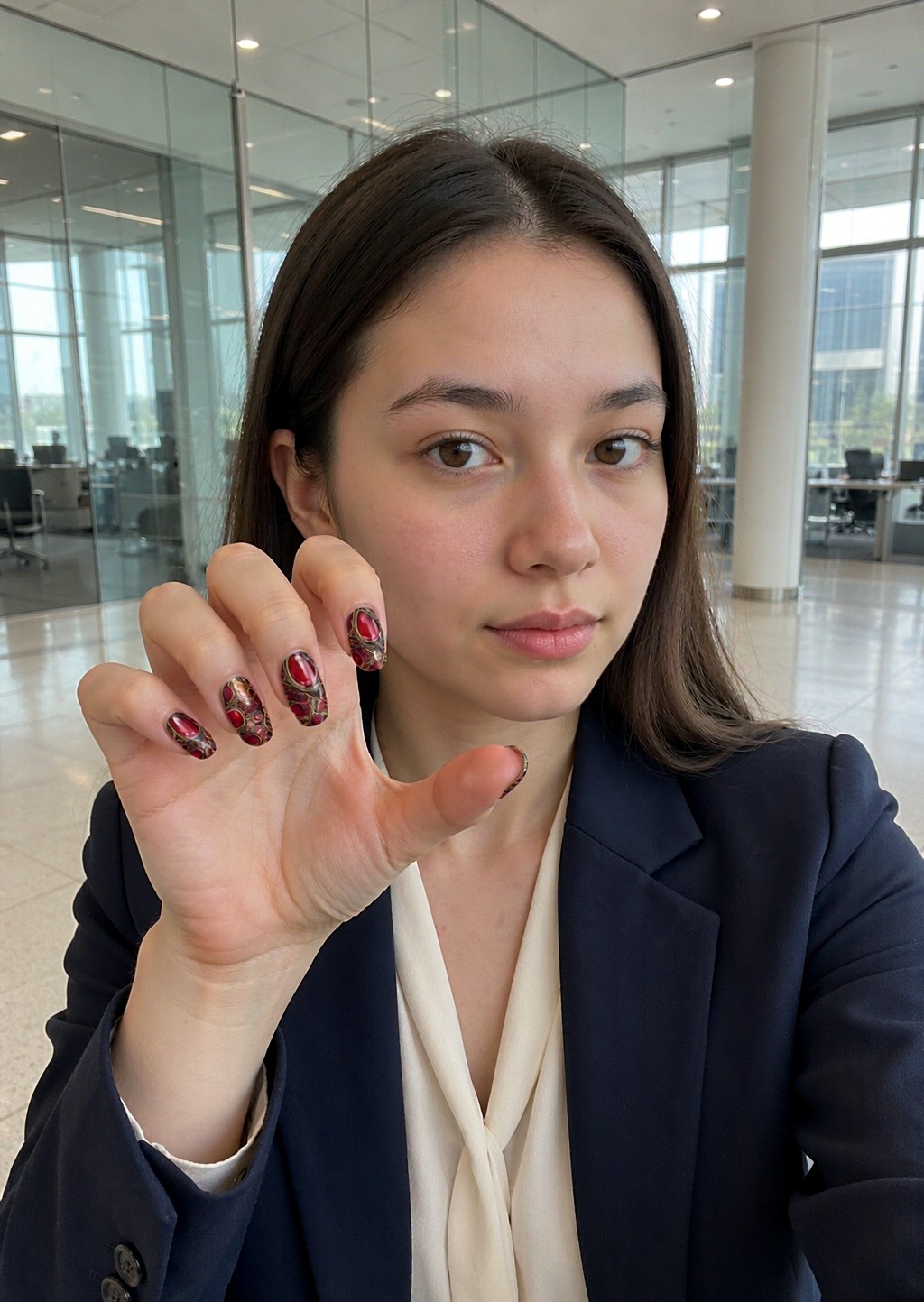
Garnet Geode, photographed exactly as they look mid-interview-prep.
Conservative industries have a dress code that mostly lives in gray areas. Nobody will hand you a written nail policy, but the unwritten rule is simple: nothing distracting, nothing chipped, nothing that clacks on the keyboard during the writing sample. Deep, dark shades thread that needle beautifully. They look deliberate next to a charcoal suit, they don’t show wear the way pastels do, and they photograph neutrally on a Zoom call if your second round happens over video.
A garnet red — deeper than a classic red, warmer than black — hits the sweet spot. The geode design adds gemstone facets outlined in fine gold against a dark slate base, so up close it’s interesting, and across an interview table it simply reads as a rich, dark manicure. That’s exactly the effect you want: detail for the people who lean in, subtlety for the people who don’t.
Here’s the real issue with interview manicures: timing. Book a salon gel appointment for three days before the interview and you risk the grow-out gap. Book it the night before and you’re gambling your schedule on someone else’s backlog. And if you’ve ever tried DIY gel at home, you may have already been burned — one reviewer I came across described her attempt as taking “probably 30 minutes and was anything but easy,” and another said her first set “only lasted 5 days before lifting.” When your interview is day 4 or 5, a lifting edge at the handshake is a genuinely distracting fear.
This is where semi-cured strips changed my own pre-interview routine. They’re real gel polish in strip form — 60% cured at the factory — and the application is closer to a sticker than a chemistry project. A box gives you 24 strips in mixed sizes, so you’re not stuck forcing a too-wide strip onto a narrow nail bed, which is exactly the sizing mismatch that causes most lifting in the first place.
Do this the evening before, after your outfit is set:
Wipe your nails clean and go over them with the alcohol wipe to remove oils. Push back anything flaky at the cuticle line; skip trimming for now, because you can tidy the edges after the strips harden. If you can’t find your alcohol wipes, a firm dry rub with a paper towel genuinely works — the medical-grade adhesive is more forgiving than you’d expect.
Peel a strip slightly narrower than each nail, set it just above the cuticle, and press from the center line outward. Don’t press onto the skin at the edges — that’s the lifting trap. Rough-trim the excess with scissors, cure each hand under a UV/LED lamp for 60 seconds, then smooth the tips with a file. The moment they come out of the lamp they’re rock hard, so you can type, braid your hair, or pack your bag with zero anxiety about smudging. That’s the part salon gel never offered me: no 45-minute dry-time vigil.
The morning of, your nails need nothing. No touch-ups, no checking. The glassy finish in the design is printed into the strip itself, so there’s no top coat to dull. Through security badge taps, elevator buttons, the handshake, scribbling notes during the case question — the surface holds. Mine have gone a full three weeks without a chip, which comfortably covers every stage of a hiring process from first round to offer call.
And the price point matters more than candidates admit. At about $5.99 a box, you’re not rationing a $75 salon investment across every application in your job hunt. If you’re interviewing at ten firms over three months, that’s roughly $12 total in nails instead of $300 — money better spent on the train tickets getting there.
You need a UV or LED lamp for the 60-second cure. If you’ve never owned one, it’s a small one-time purchase, and if a lamp absolutely isn’t in your budget this week, don’t force a last-minute improvisation — do a clean buff-and-clear-nails look instead. Nothing undermines “detail-oriented” like a half-cured manicure you’re hiding under your fingertips all day.
But if you can order the strips even a few days ahead, you’ll walk in with the most quietly confident detail in your outfit. Dark garnet, a flash of gold at the edges, zero chips — the kind of manicure that answers the “would you fit in here?” question before anyone asks it out loud.
One thing you can cross off the prep list tonight: your hands. The design I now hand to every interview-bound friend is Garnet Geode — order a few days out, cure it the evening before, and let the handshake be the one thing you’re not rehearsing. Good luck in there.