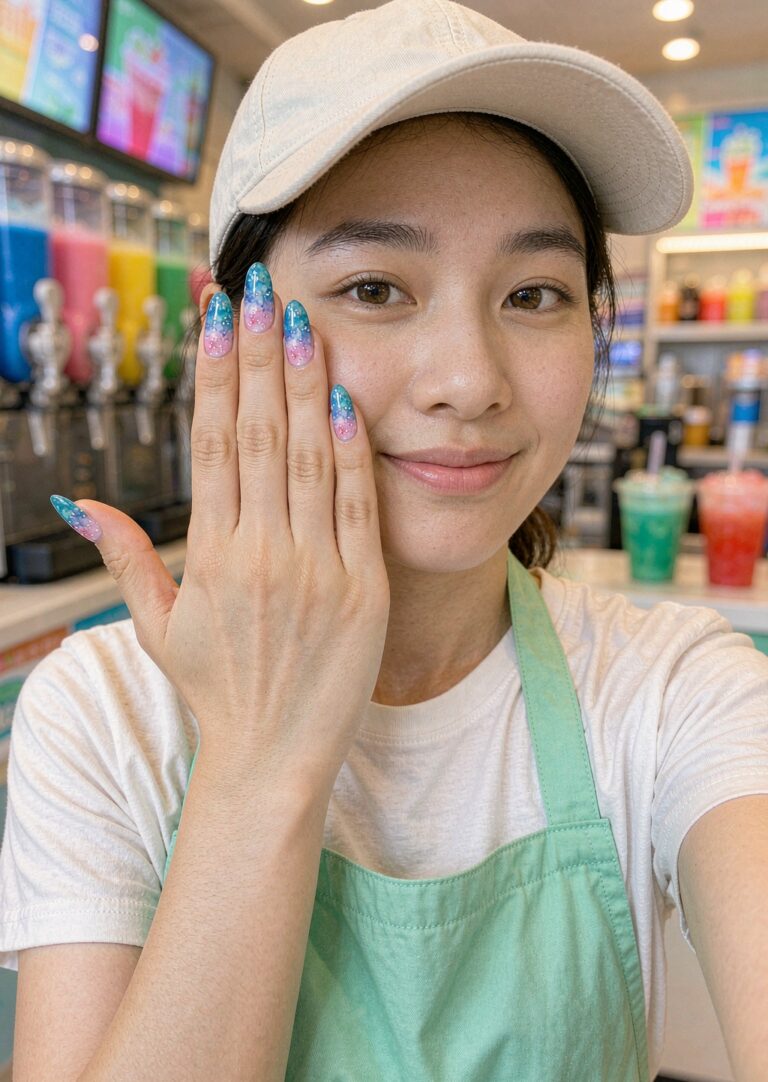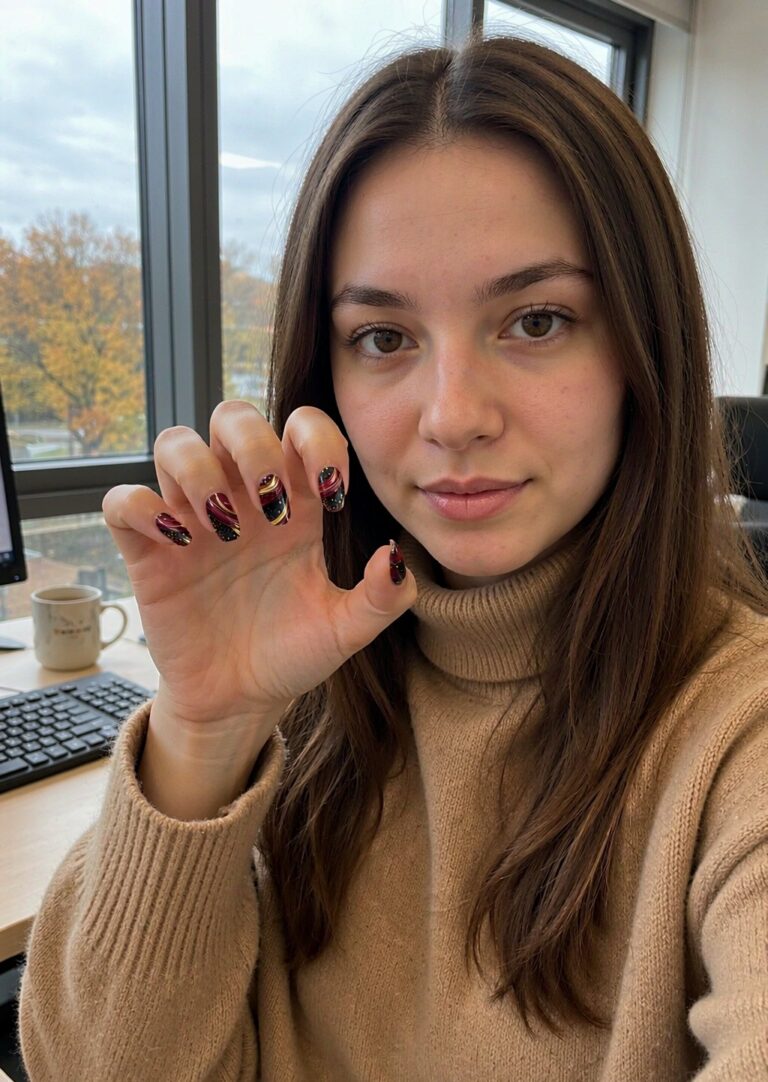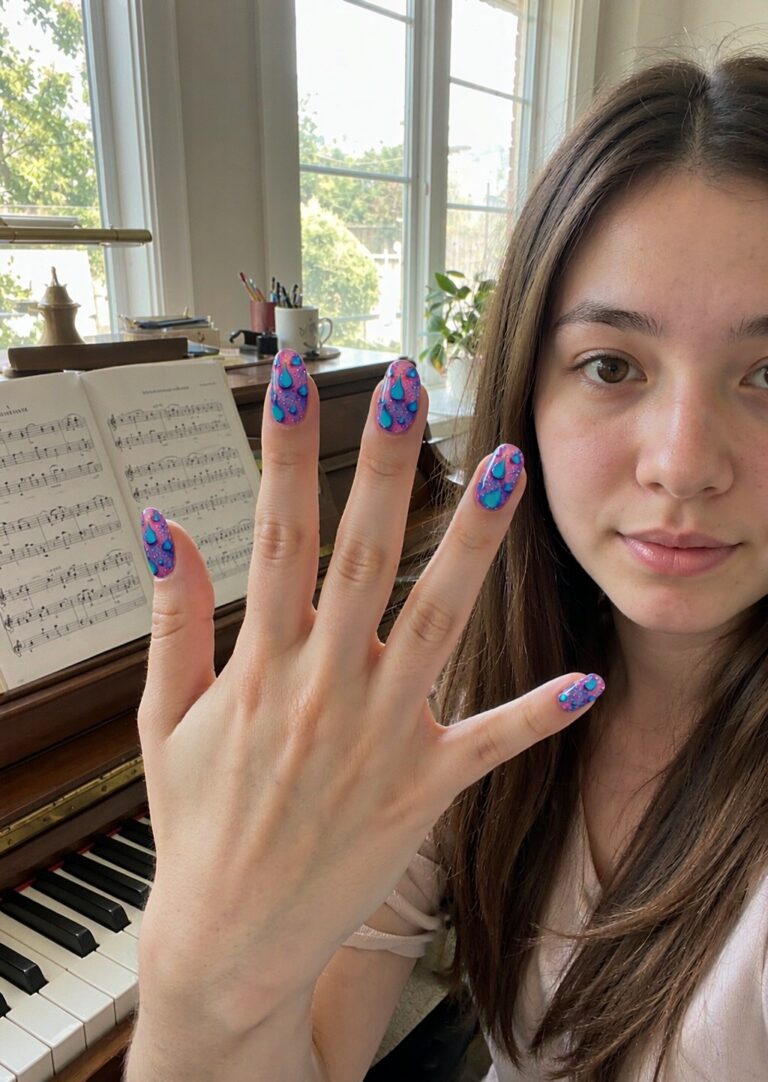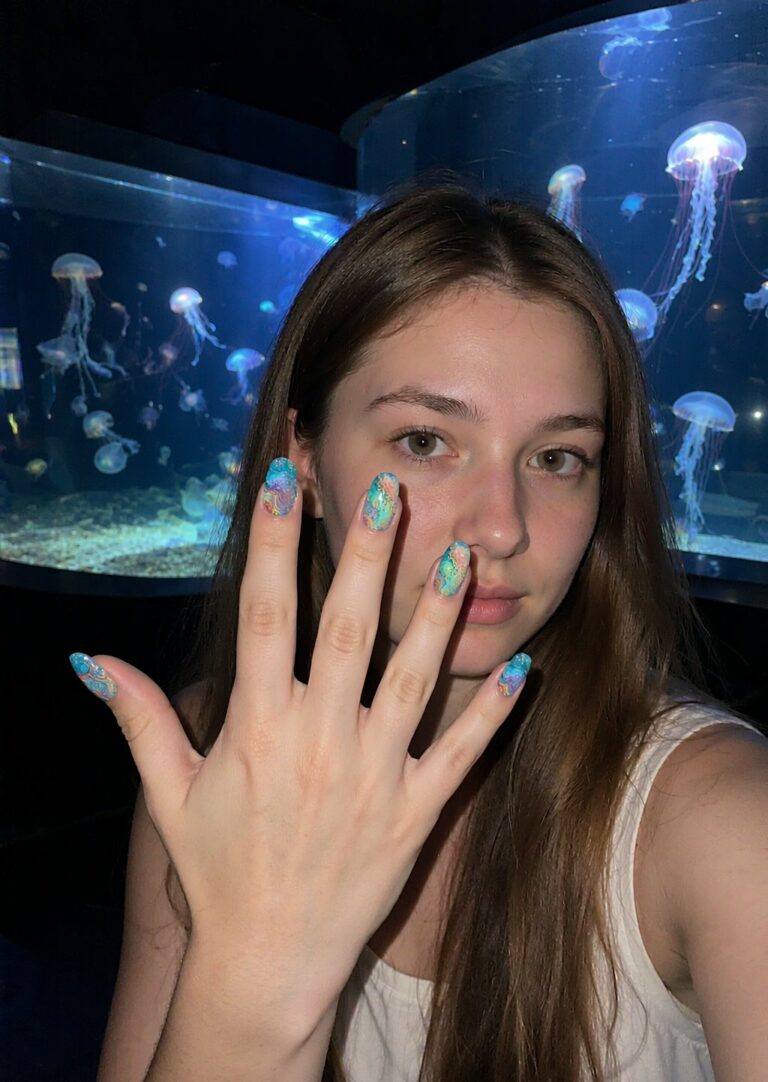
Before you go —
we send free sample boxes to businesses evaluating our strips.
No minimum. No obligation. Just try them on real nails.
Every market report on nail wraps says the same thing: the category is growing, e-commerce is winning, the consumer wants convenience. None of it helps you decide what to order, at what price, for whom.
So we did the boring work instead. We read the review summaries on the best-selling listings, pulled the published fee schedules and the 2025 distribution data, and looked at what has actually sold in the last twelve months. What came back is a category with a lot of demand and surprisingly few people serving it properly.
We manufacture semi-cured gel strips, so read this with that bias in mind. The unflattering version: the biggest gaps in this market are not marketing gaps. They are fit gaps, channel gaps and paperwork gaps — all of which are things a buyer can fix with a purchase order.
Start with real listings rather than projections. These are the prices buyers are competing with right now.
| Product, where it sits | Price seen | What it tells you |
|---|---|---|
| Amazon semi-cured gel strip, gradient cat-eye | $8.99 | 323 units in one month. This is the price floor and it is brutal |
| AutyaMee semi-cured, Amazon bestseller chart | $9.98 | About 1,077 units in one month at under $10 |
| Adora Couture semi-cured French, Amazon | $13.74 | 488 units in one month |
| MOYOU LONDON semi-cured | $14.72 | The upper end of the marketplace band |
| Dashing Diva Gloss, mass retail | Around $9, 16 strips | Cheapest format to try |
| Dashing Diva Glaze, Ulta | $12 to $15, 32 strips | 32 strips is the lowest cost per manicure on the shelf |
| Ohora, Amazon and Ulta | $11 to $16, 20 strips | The brand the others position against |
| Le Mini Macaron | Around $14, 20 strips | |
| Danni and Toni, direct | $17.99 list, $9.99 in promo | 44 per cent promotional depth on its own site |
| Talons, men’s, direct | $35 to $50, 30 nails plus tools | Proof that a premium tier exists |
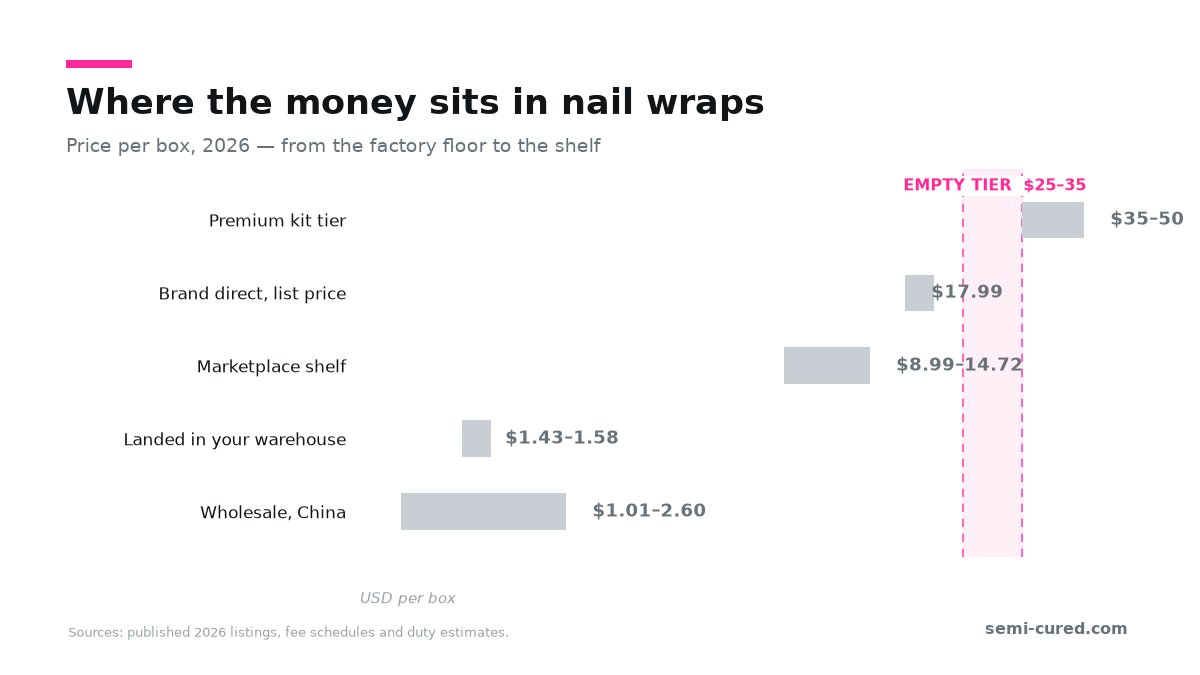
Two things jump out. First, almost everyone is fighting inside the same $9 to $15 band, and the discounting is deep enough that list price is close to fiction. Second, the wholesale ladder behind those prices is far flatter than the retail ladder: on Alibaba, semi-cured strips move at roughly $1.01 to $2.60 per unit at minimum orders of 10 to 300, and one listing shows 366,000 units sold. The finished good changes hands at about a dollar and reaches the consumer at nine to eighteen.
That gap is the whole story of this market. It also means the interesting places to compete are the two ends of the ladder that nobody is standing on.
Open Ohora’s flagship listing on Amazon and look at what the reviews actually say. Amazon’s own summary shows 76 customers discussing sizing — 61 of them negative.
The complaints are specific and they are all the same complaint:
The category’s own analysts reach the same conclusion: the size system is the hardest thing for a competitor to copy, and going from 10 sizes to 16 measurably cuts returns and negative reviews. Fit is not a marketing problem. It is a tooling problem.
Why it stays open: a finer size grid means more moulds, and incumbents cannot retrofit it into SKUs that are already cut. A marketplace reseller has no way to commission a mould at all.
What to do: ask your supplier for the size chart in millimetres, not in S, M, L. Then commission a wide-fit and a petite-fit SKU. If you cannot afford six moulds, buy the one your own hands need and say so on the listing — that alone beats every competitor who pretends one size fits all.
In September 2026 a New York brand called Talons announced it had shipped more than 10,000 orders in its first year. It sells press-on nails at $35 to $50 a set, in a reusable tin, with a clipper, a file, an alcohol wipe and spare adhesives.
The entire product is a fit decision. Talons measured hundreds of men’s hands with calipers before making anything, then built a mould described as wider, flatter and shorter than anything on the shelf, which the company says fits 95 per cent of men’s hands. More than 15 per cent of its customers reorder.
That is not an anomaly. Men’s grooming is a $64.6 billion global market heading for $90 billion by 2034, and skincare, hair and beard care each built their own shelf on the way. Chinese market research tracking the nail category puts male consumers at about 9 per cent of the market with an average basket roughly 21 per cent higher than women’s.
Why it stays open: it is not a marketing gap, it is a mould gap. Every strip on the shelf is cut for a smaller hand, and no brand can fix that with an ad budget.
What to do: commission one men’s mould. Start with six designs — matte black, chrome, tonal nudes, one graphic. Sell it as a kit in a tin, priced against a barber visit rather than against a $10 competitor set.
The 2025 distribution split for nail strips is lopsided: e-commerce took 57.8 per cent, retail and pharmacy 34.18 per cent, and beauty salons 8.02 per cent. Salons are the smallest slice of a market they should own.
The reason to look at them now is labour. The US nail technician vacancy rate reached 14.2 per cent in 2025, and major salon chains began testing wholesale strip programmes to standardise results and reduce how much technician time each client consumes. A strip-based express service cuts chair time dramatically compared with a full gel application, which is exactly what a salon with unfilled chairs needs.
Why it stays open: selling to a salon is a B2B sell with a labour-hours pitch. Most consumer brands have never made one and do not want to learn.
What to do: price at keystone, roughly half your retail price, build a small counter display, and pitch the owner in minutes of technician time saved per client — not in designs. Twenty salons at 24 sets each is 480 sets, a few hundred dollars of goods and your first repeat-order channel. Salons reorder on a cycle. Marketplaces do not.
Toe wear runs longer than hand wear — up to four weeks, because a toe nail flexes less and never types. Pedicures are seasonal and among the highest-margin services in the salon book. And in cold markets the failure mode is different: boot friction destroys a thin film far faster than it damages a cured gel.
Why it stays open: brands ship one mould and cut it down. Toe nails are wider and shorter than finger nails, so a hand strip on a toe is always a compromise someone is tolerating.
What to do: a dedicated toe mould, wider and shorter, in fewer sizes. Then a two-season calendar — brights for spring and summer, nudes and reds for winter, when the demand is indoor and the competition is asleep.
In May 2026 Consumer Reports tested products marketed as HEMA-free and found residual HEMA between 0.03 and 0.12 per cent in multiple SKUs. A retrospective study in Amsterdam covering 2,927 people found 1.5 per cent sensitised to HEMA, mostly women, with cosmetic nail products the most common cause. Dermatologists have reported severe swelling in a patient using a product whose front of pack said HEMA-free.
Here is the part most buyers miss: HEMA-free is not acrylate-free. The common replacements are HPMA, Di-HEMA TMHDC, IBOMA, IBOA and HDDA — every one of them still a reactive acrylate. The claim on the front of the pack is doing less work than the buyer assumes. Meanwhile the photoinitiator TPO has been prohibited in EU cosmetics since 1 September 2025 and in Great Britain since 15 August 2026, which forced the entire industry to reformulate.
Why it stays open: a claim you can defend costs money. Third-party testing, a full acrylate disclosure, a safety assessment. Most sellers would rather print the word for free.
What to do: buy the version you can prove. Ask your supplier for a third-party report that names every acrylate in the formulation, a TPO-free statement and a Cosmetic Product Safety Report. Then put the certificate reference on the pack. In the EU and UK this is not marketing, it is shelf access — a retail buyer will ask for it at the listing stage, and the brand that has the paperwork gets the appointment.
Look at the price ladder again. Amazon’s volume products sit between $8.99 and $13.74. Danni and Toni list at $17.99 and discount to $9.99. Everyone is optimising for trial price, because everyone is paying for traffic and a low price lowers the hurdle.
Then look at the other end. Talons sells a tin containing 30 nails, a clipper, a file, a wipe and spare adhesives for $35 to $50. People buy it. The mid-tier kit — a complete at-home set with a lamp, prep, three designs and a spare — is essentially unoccupied in strips.
Why it stays open: direct-to-consumer brands price for trial because they compete on paid acquisition. Nobody is optimising for basket value.
What to do: build one kit and price it against the salon appointment it replaces, not against a competitor set. A salon gel manicure runs into the tens of pounds or dollars. A £30 or $35 box that covers three manicures is a different conversation, and it is the only way to make a paid-traffic business work at this category’s unit price.
Strips are a consumable. Heavy users get through 6 to 12 sets a year. Almost nobody sells them on a plan, because almost nobody models it properly.
The numbers that decide whether it works: subscription-box churn typically runs 8 to 12 per cent a month, the beauty sweet spot is $35 to $55 a box, and contents plus packaging plus fulfilment need to stay under 45 to 50 per cent of the price. Offering a pause instead of a cancel reduces churn by 20 to 30 per cent.
Why it stays open: most brands sell a strip as a fashion item with a season, not as a refill.
What to do: a refill plan at $19 to $25 every two months, not monthly — the wear does not support monthly, and an honest cadence churns less. Include a skip option from day one. Then let the subscription carry the fixed cost and use one-off purchases for discovery.
Read across all seven gaps and the same two assets keep coming up.
A size system. Not a size range — a system, in millimetres, published, with a wide and a petite option. It is the only part of the product that customers complain about by name, and the only part a competitor cannot copy quickly.
A compliance file. A safety assessment, a full ingredient disclosure, a responsible person for the market, and test reports that stand up. In the EU and UK this decides whom the retailer will even talk to.
Everything else in this category — the designs, the photography, the influencer list — is copyable within a fortnight. Those two are not.
If you are sizing up the category, start where the evidence is loudest. Ask us for a sample box in more than one size so you can feel the difference yourself, and ask for the size chart in millimetres and the lab reports at the same time. Those are the two questions a supplier should be able to answer before you place an order, and on most of the listings above, they cannot.